All
/
WINE
The Master of Wine’s Guide to Chilean Varieties & Premium Preservation
01.05.26
•10 min read
01.05.26
•10 min read
The South America Wine Guide is the next best thing to visiting the continent itself - a lavish and learned trip through the past and present of its winemaking culture. When ETO co-founder Dina Jahina picked it up, she couldn’t put it down. And immediately reached out to its author, the award-winning writer and Master of Wine, Amanda Barnes.
Amanda’s expertise and enthusiasm for South American wine shines through every page of her stunning volume - ‘a definitive guide to the wine of Argentina, Chile, Uruguay, Brazil, Bolivia and Peru’.
The book combines extraordinary detail with a vivid picture of the continent's past and present through the lens of wine and wine-making. It's perfect for dipping into and learning about regions and their grape varieties, before heading to your local wine merchant to enjoy a new discovery.
There's so much to talk about in these amazing countries, but in this conversation with Amanda, we’re zooming in on Chile...

Could you start by telling us how you first became immersed in the world of wine?
My parents always loved food and wine — in my household, the argument about “whose turn is it to cook?” was because we all wanted a turn! So I grew up with a great appreciation of food, and later wine as an additional element of that experience. We would go on holiday to Spain or France each year, and our days were spent going to the market, picking up local ingredients, then picking up local wines, and cooking at home. It made me realise that wine was part of gastronomy and culture.
You were awarded the title Master of Wine in 2025. It’s a staggering achievement: fewer than 430 people in the world have this title. We could spend the whole conversation just talking about that journey! Could you tell us something about the path that took you to the MW?
I started formally studying wine while living in South America, and from the Argentine sommelier school it led to the WSET, and eventually the Master of Wine. The MW was a natural step from the WSET Diploma, as I won the Derouet Jameson Prize for my exam results in the Diploma, which supported my first year of exam fees in the MW. It was a huge boost, both in terms of financing that first year (not cheap for a freelance writer!) but also giving me the confidence to go for it. I probably didn’t realise it was anywhere near as hard as it is, when I started… and it was probably best that way!
Amanda Barnes MW. Photo by Matt Wilson.
“I have decanted several wines into my ETO…for the purpose of saving the rest of a bottle without as much oxygen as would be left in the bottle.”

So what took you to South America? And where do you call home nowadays?
I moved to South America in 2009, in search of adventure and a new experience, I guess. I wanted to write about gastronomy, travel and wine, and figured going to a great source of those experiences was a good way to do it! So I quit my job as editor at the local newspaper in Hampshire and headed to South America, with a one-way ticket and an appetite for new adventures! Mendoza has been my base since then.
Your book covers the wine regions of Argentina, Chile, Uruguay, Brazil, Bolivia & Peru… A lot of these are places we perhaps wouldn’t traditionally associate with wine, so it’s a real book of discovery! Out of all these countries, if you were visiting South America for the first time, which one would you pick, and why?
Probably Mendoza. Not just because it is my home, and a beautiful destination, but because it is really easy to navigate, in terms of visiting lots of wineries within a short distance. Uruguay too is a very charming and wonderful country to visit for your first time on the continent. Chile is incredible, but a lot more spread out. And Bolivia, Peru and Brazil require a more adventurous spirit!
Bouchon’s wild Pais vines in Maule. Photo by Bouchon.

We’ve asked you to take us on a journey through Chile’s wine in the past, present and future. In your book, you describe Chile beautifully as “a kaleidoscope at the end of the world…” I think people underestimate the diversity of Chile. Its landscapes, its flavours, its history, its people. It really is a country that is impossible to overgeneralise, and you can have wildly different experiences in different regions.
I really love your line about how Chile was made (“leftovers make the best meal.”) How does that define the terroir?Again, Chile is all about diversity. Its wine regions are squished between the intense geographical juxtaposition of the Andes mountains and the bracing Pacific Ocean, with hills, rivers and meadows in between. You can find a never-ending patchwork of different soils and each vineyard experiences its own microclimate, meaning that the wines can express wildly different characteristics within a small distance — even, or perhaps especially, when planted with the same variety.
Often, I find that the best place to fully understand a country is to start at the beginning. How important would you say wine is to Chilean history?Chile’s wine history starts with that of the continent. In the mid-16th century, when the Spanish colonisers began settling around the southern cone, the clergy brought vines to make wines for mass. It all grew from there. Each new wave of European immigrants brought new varieties and winemaking knowledge, and so it has consistently evolved throughout history. Today, I think we are witnessing the modern revolution of Chilean wine, but as an amalgamation of what happened before. And always reflecting on the different periods of history and influences it has gone through.
Tabali’s vineyard in Limari. Photo by Tabali.
I was delighted by the idea that drinking habits in Chile shifted with changes in the culture of the siesta…
Ha! You’re referring to a comment in my history chapter for Chile... It’s an interesting phenomenon. People often ask why Argentina still has a strong wine culture, while Chile doesn’t. Chile ‘modernised’ much quicker than Argentina — the work culture was modelled on the US or northern Europe. And so the culture of the siesta disappeared far sooner than in Argentina. Meaning that people stayed at the office or their jobs throughout the working day, and hence the tradition of drinking wine at lunch rapidly disappeared. And with it, sadly, much of that early wine culture. It’s far more common to drink wine in the countryside, where you can still get away with having a cheeky glass at lunchtime, than in the cities.

So what are the Chilean wine regions people will recognise in their supermarkets? And also, what are the wine regions we need to discover?
Maipo, Colchagua, Casablanca — these better-known regions are well worth discovering. But I would also urge people to look for the emerging cool climate regions of Limarí, Osorno and Malleco. And the old vines of Itata, Bio Bio and Maule.
Chile feels like a victim of its own success. It priced itself at the bottom of the market and is known for mass production. But do their consumer-friendly priced wines compete on taste with more expensive rivals?
Chile can compete at every price level, if the consumer is open-minded enough to give it a chance! Yes, you can get great, cheap wines from Chile, which can blow the competition out of the water. But you also get excellent premium-priced wines, which will still often blow the competition out of the water! If you recognised the quality in Chile’s cheap wines, give its expensive wines a shot! I don’t think you’ll be disappointed.
What kind of changes are the Chilean wine industry experiencing right now?
Chile is in the middle of the global wine crisis, much like everyone else. We are seeing vineyard areas shrink, and it’s a really challenging time for the industry. I would be lying if I said it is all rosy. But, on the positive side, crisis spurs innovation and creativity. Consumers are going to get extraordinary bang for their buck at the moment! If I were you, I would be buying wine by the case-load and enjoying the low price points before the global economy bounces back. This is one of the best moments to buy wine — the quality is high, and the prices are at a record low.
Alcohuaz vineyard in Elqui. Photo by Vinedos de Alcohuaz

There’s a huge variety of grapes grown in Chile. Which 5 regions and wineries would you take your friends to, and why?
Wineries are a bit limiting... But if you want me to pick five varieties from five different regions, that’s easy:
Cinsault, Itata - one of the most ethereal, delicate wines being produced in Chile today and from incredible old vines.
Chardonnay, Limari - my favourite place for stellar Chardonnay in Chile, coming from limestone soils and the cool coast.
Cabernet Sauvignon, Maule - this is controversial, but some of my favourite Cabs at the moment are coming from Maule where old vines rule and there’s delicious nuance to the wines. Here I will highlight two producers: Vinos Baettig and Miguel Torres.
Semillon, Apalta + Maule - I’m a huge fan of the old vine Semillon we have in Chile, and Apalta (Floresta, Carmen) and Maule (Bouchon) are the hot spots.
Coastal Syrah - Syrah is notoriously hard to sell, but Chile has some incredible coastal expressions from San Antonio, Casablanca and beyond. Matetic and Kingston are two of my favourites at the moment.
Some of the photos of vines in your book don’t look like the neat rows and rows of vines you see in most vineyards! What’s going on there?
Ah, the wild País vines of Bouchon! País is our oldest variety in South America, and one of my favourites (I’m currently writing a book on it!) These are some wild vines of País that grew around trees in a small creek in the vineyard of Bouchon and Longavi in Maule. The only way to harvest them is by climbing on ladders! Similar to what happens in Cinti in Bolivia. It’s fun to see, but the wines are also very unique and worth hunting down!
Pais harvest in Maule. Photo by Torres.
As a Master of Wine, I’d love it if you could tell us about decanting - what happens to the wine, and why does it happen?
The theory behind decanting a wine is to give it more oxygen and allow it to open up. For wines like dense Cabernet Sauvignon, or tannic Nebbiolo, some decanting can help open up the wine to express more layers.
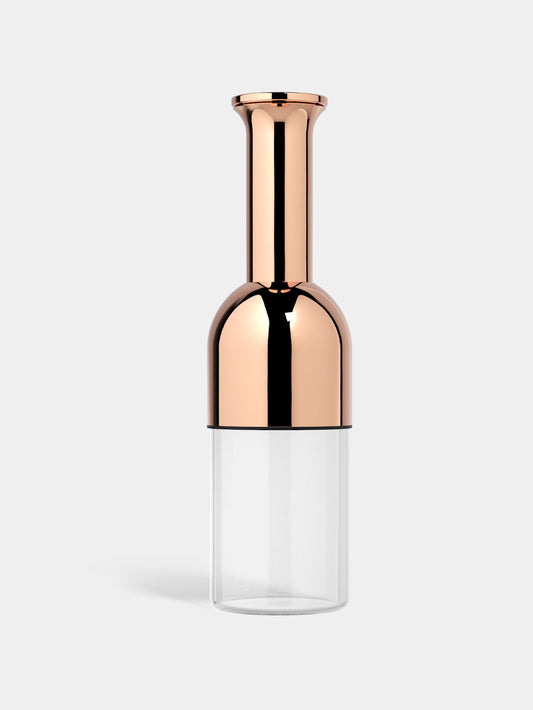
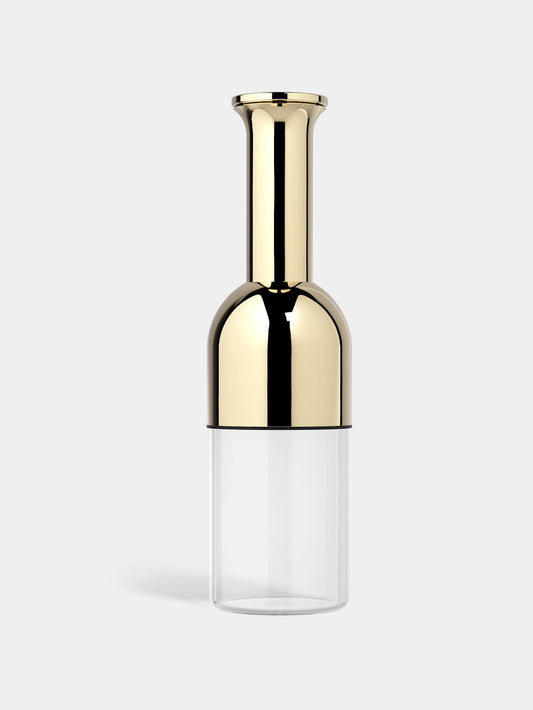
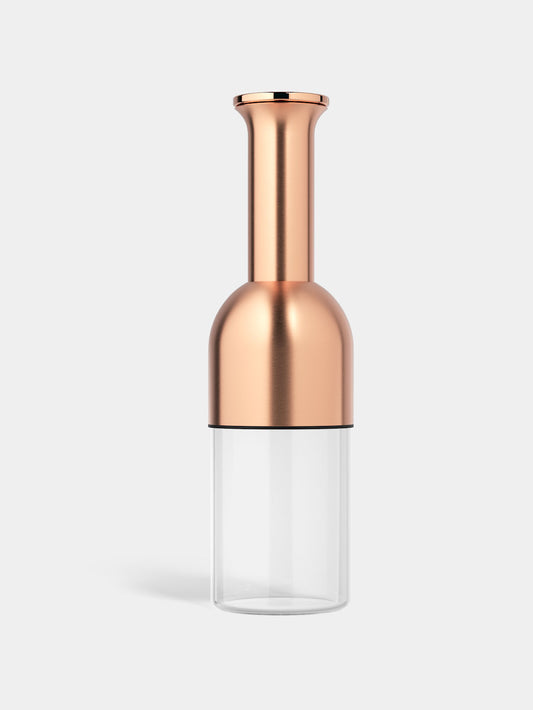
So what have you decanted into your ETO wine decanter, and been enjoying over the last week?
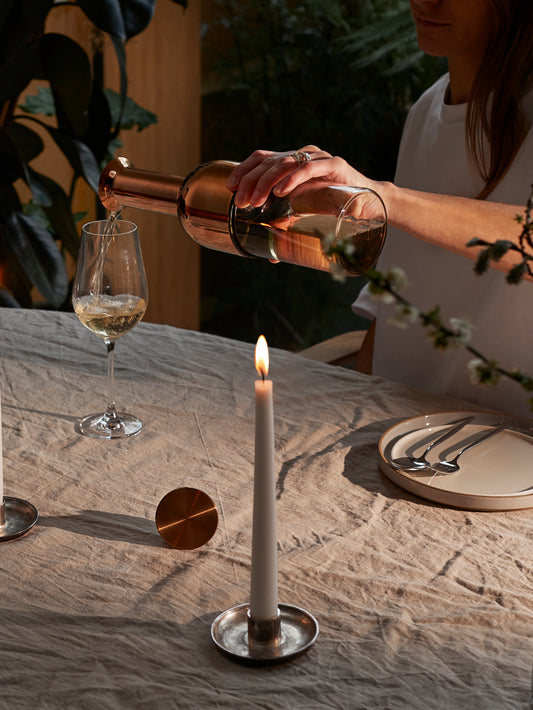
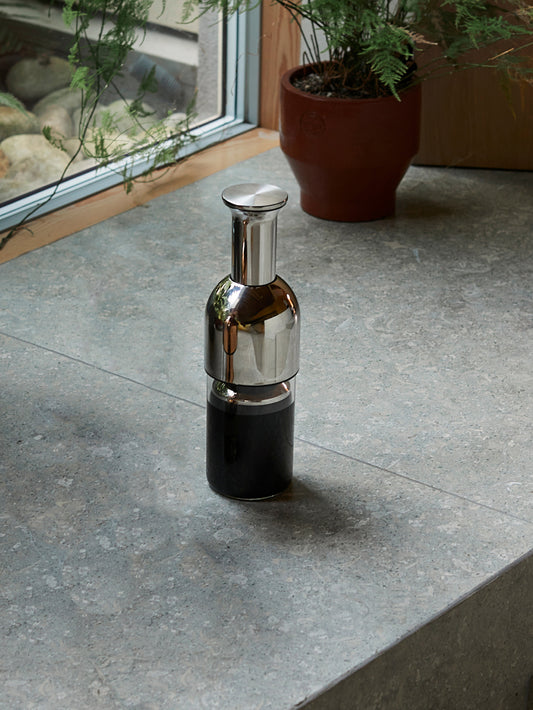
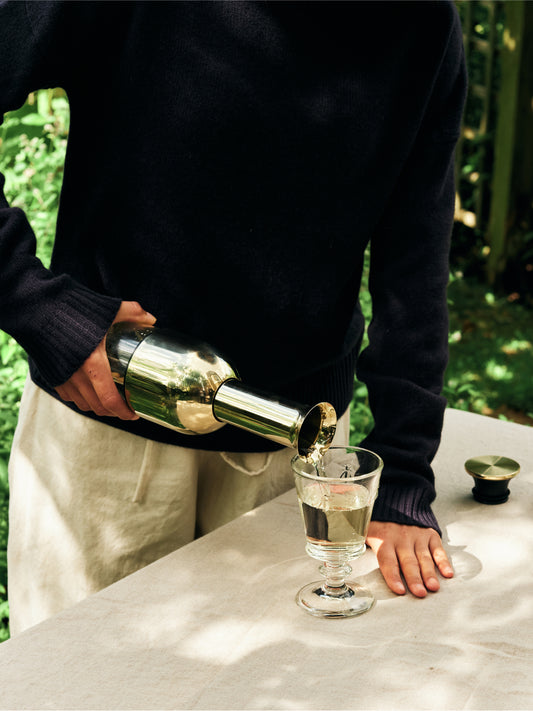
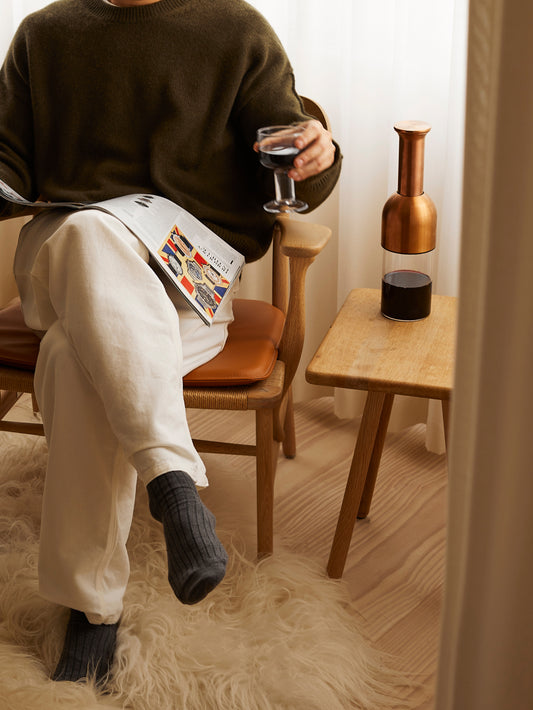
I have decanted several wines into my ETO already. Not for the purpose of decanting though… but for the purpose of saving the rest of a bottle without as much oxygen as would be left in the bottle (with the cork in, of course). I do feel it has a decanting effect though, the wines definitely feel more open on a second pour.
Are there some Chilean wines that you definitely decant?
I’m not a huge fan of decanting in general to be honest. I use large, beautiful wine glasses. But for a more complex, tightly packed Carignan or Bordeaux blend, I might pop it open an hour or so before serving.

What are some typical Chilean dishes you enjoy, and which wines would you pair with them?
Ceviche, and it has to be with a typically spicy and fresh coastal Sauvignon Blanc, perhaps from Leyda for that extra herbaceousness, which is delicious with the fresh herbs and chilli pepper in fish ceviche.
There’s a strong German culture in the south. One of my best friends in Chile, Francisca, is from the south and always brings brilliant charcuterie and sausages from southern Chile. I love that with a juicy País from Maule or Itata, although she’s more partial to a richer blend. So we open both!
And another of my best Chilean friends, Emily, has a brilliant provider of king crab from Austral Chile. We make homemade alioli, slice up some silky Chilean avocado, and feast with a bottle of Limarí or Aconcagua Costa Chardonnay. A match made in heaven.
Do you have a favourite Chilean recipe you could share?
I love the fresh seafood, fish and oysters you get in Chile, and one of my go to recipes when I spend time there is ceviche. Whatever fish or seafood is freshest that day, and simply marinaded in the juice of small Chilean limes (lima de pica!), with chopped coriander, finely diced chilli pepper. If I’m feeling fancy, I’ll blanche some red onions in sugar before (it takes out the intense raw onion flavour). A bit of salt, and hey presto. The freshest, most delicious Chilean treat, to enjoy right by the sea with your chilled glass of Chilean Sauvignon Blanc!
You were in the Northern hemisphere in February, hosting master classes on Uruguay wines at Wine Paris earlier in the year. What’s coming up next for you?
I’m in Uruguay at the moment, actually! But just for a couple days, for a special cultural announcement in the wine industry. Then I head back to Mendoza for a few days, before hopping back to England ready for Decanter World Wine Awards, where I am Chair of Chile. I don’t sit still for long, as you can tell..!