All
/
WINE
How long can you really leave wine in a decanter?
21.09.25
•0 min read
21.09.25
•0 min read

The decanter is still on the table. There's a third of a bottle left, everyone's gone home, and it's a quarter to midnight. So, how long can wine usually stay in a decanter? Shorter than you'd hope.
Most reds are at their best somewhere between two and five hours in. Delicate older wines can be past their peak inside an hour. And an open decanter left overnight will cost you something you can taste.
The reason is clear once you see it: a wide-based decanter is built to give wine the largest possible surface area and the most air above it. Everything that makes it brilliant at opening a wine up makes it hopeless at keeping one if it’s an open decanter. Of course, a sealed one is a different story.
Wine has no off switch for aeration. The oxygen drawing out those aromas in the first hour is still hard at work in the fourth, and the eighth, and while you're asleep. There's no point at which the wine decides it's had enough and stops.
A wine opening up and a wine going over are the same process, at different times.
The chemistry runs like this: oxygen reacts with the phenolic compounds in wine to form peroxides and quinones, which in turn oxidise the ethanol into acetaldehyde. Acetaldehyde is what you're smelling when a wine turns towards bruised apple, or takes on a faint sherry note. The Australian Wine Research Institute maps the sensory path in order: a dulling of the aroma first, then cardboard, straw and hay, then sherry-like and madeirised, with wet wool and varnish at the far end. Colour follows: whites turn brown, reds go brick at the rim.
Running alongside that, on a slower clock, is something else entirely. Acetic acid bacteria need oxygen to work, and given days rather than hours, they take wine towards vinegar. That's spoilage rather than oxidation, and it's why a decanter left out for a week is an entirely different problem to one left out overnight.
Two variables govern all of it. Surface area in contact with air, which is the whole design of a wide-based decanter, and the whole reason it works in the first place. And temperature: a decanter in a warm kitchen is on a far faster clock than one in a cold room, because heat accelerates every reaction described above.

Wine comes with its own defences. Tannin, acidity, alcohol and sulphites all slow the decline, which is why a structured young red will outlast a delicate one by hours. The AWRI puts it plainly: reds withstand significant oxidation because their higher phenolic content acts as a natural antioxidant, while floral whites such as Riesling are among the most vulnerable.At the fragile end, then: mature wines, low-intervention and low-sulphite bottles, and anything already drinking at the top of its window. These want drinking, not keeping.At the other end sit the fortified wines, which is why port has traditionally lived in a decanter at all. Higher alcohol and, in many cases, a lifetime of deliberate oxygen exposure during production means they simply aren't playing the same game.Then there's the variable almost nobody thinks about: how full the decanter is. One glass sitting in a two-litre vessel has an enormous volume of air above it. The same decanter holding most of a bottle has far less. Same glass, same evening, two very different clocks.
Young and tannic will take two to four hours, sometimes considerably more. A young Barolo or a serious Cabernet can be poured at lunchtime for dinner and be all the better for it. Medium-bodied reds want an hour or so. Mature wines often want 30 minutes or less, and some want none at all.
For anything with 15 or more years on it, change the frame entirely. You're decanting for the sediment now, not the air, and the wine may be ready the moment it lands. Pour it, taste it, and if it's singing, it's singing. Waiting will not improve it.
Whites and orange wines deserve better than the convention they've been handed. Full-bodied whites gain from air, reductive whites gain a great deal, and orange wines carry enough tannic structure to behave like reds.
Which brings us to this method: taste the wine when you pour it, then taste it again 20 minutes later. The direction of travel, better or worse, tells you more than any number we could give you. That, in the end, is how long wine should breathe: for as long as it keeps improving, and not a minute more. If you want the by-the-bottle version of this, we've written separately about how long each style of wine lasts once opened.

Expect to lose aromatic lift and freshness, more from a delicate bottle than a robust one, and expect a light red to have given up more than a tannic one. That said, it won't hurt you, and it will still be wine in the morning.
Two things help if the decanter is staying out. Cover it, which cuts the air exchange at the surface. And get it cold, because refrigeration slows every reaction described above.
Storing wine in a decanter, in the conventional sense, means fighting the very thing that makes it good at opening a bottle up in the first place. Real wine preservation needs something else entirely, and there are three options (before we get to the fourth):
Then there's the design question underneath all three, and it's the one that interests us. The reason a decanter can't preserve wine is that it's open to the air. Change that single thing, and the vessel that was worst for storage becomes the best one you own.

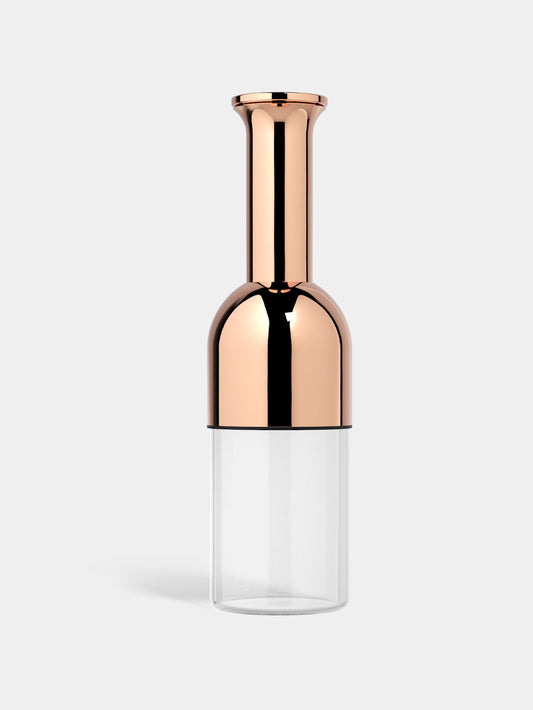
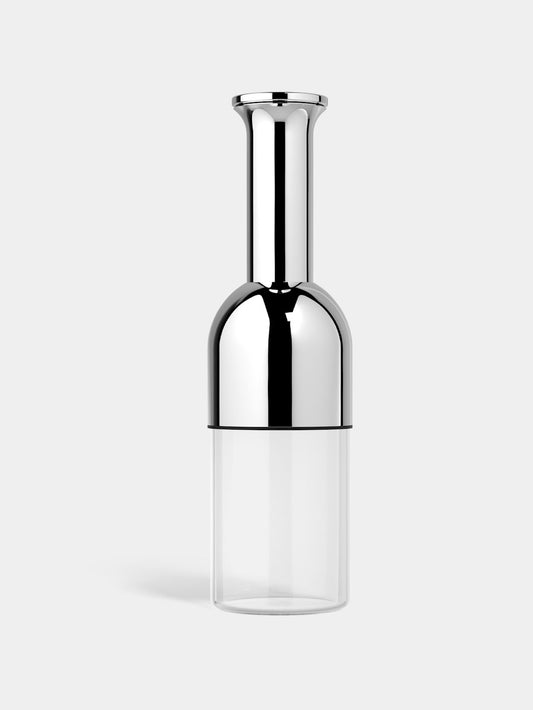
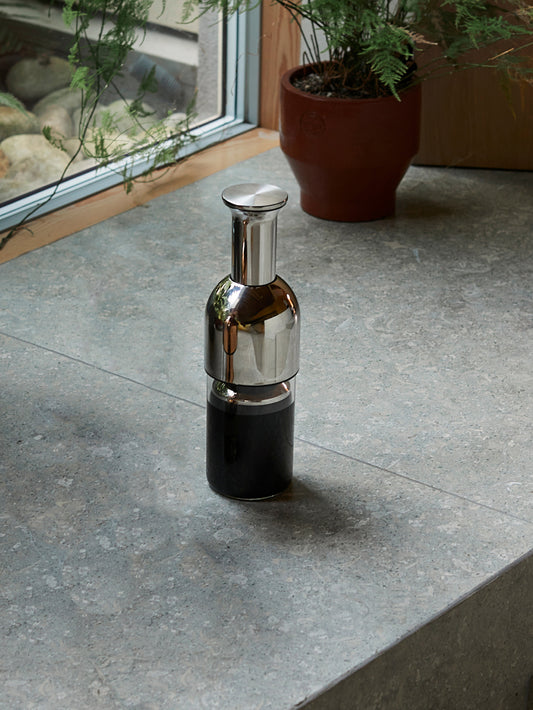
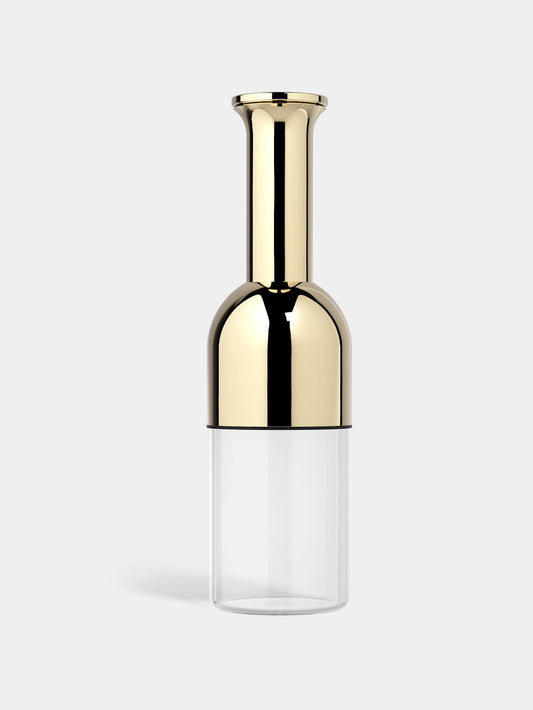
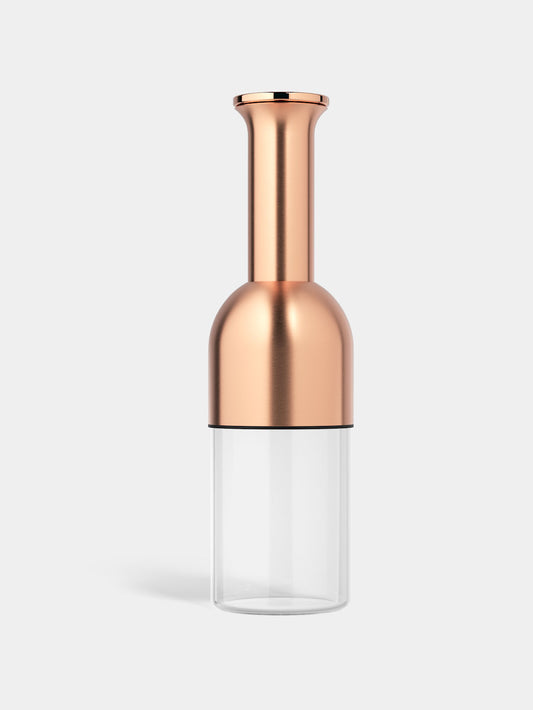
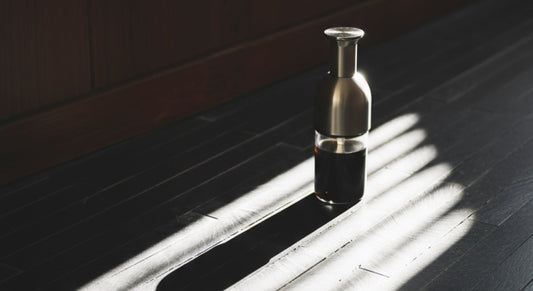
That's ETO: a wine decanter and preserver built to close the gap. Decant as normal, replace the closure, push the neck down, and the seal locks automatically when it meets the surface of the wine. No pumps, no gas, nothing to replace. What's inside is protected from wine's three enemies, oxygen, light and heat, for up to two weeks (14 days), and it's built to stand in a fridge door rather than fight it.
We went through 12 months of laboratory work at Bangor University against competing preservation systems, and blind tastings with Master of Wine Richard Hemming, who found no perceptible difference between a freshly opened bottle and the ETO-stored sample on day seven. You can read more about the testing behind that claim, including where the numbers came from.
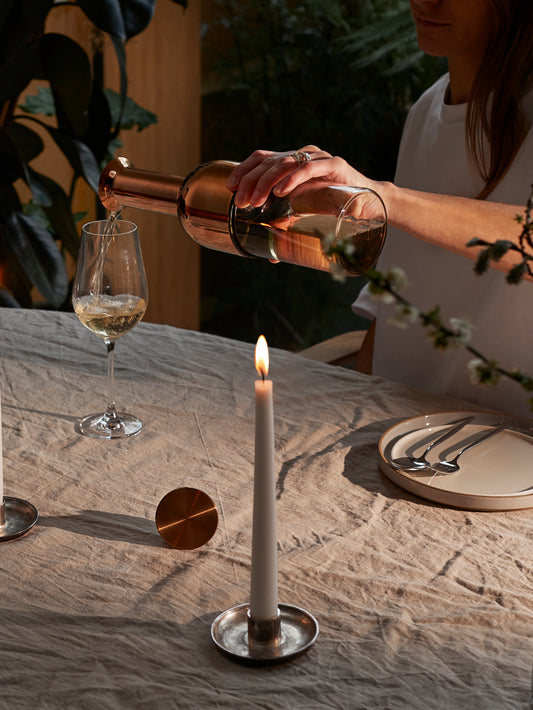
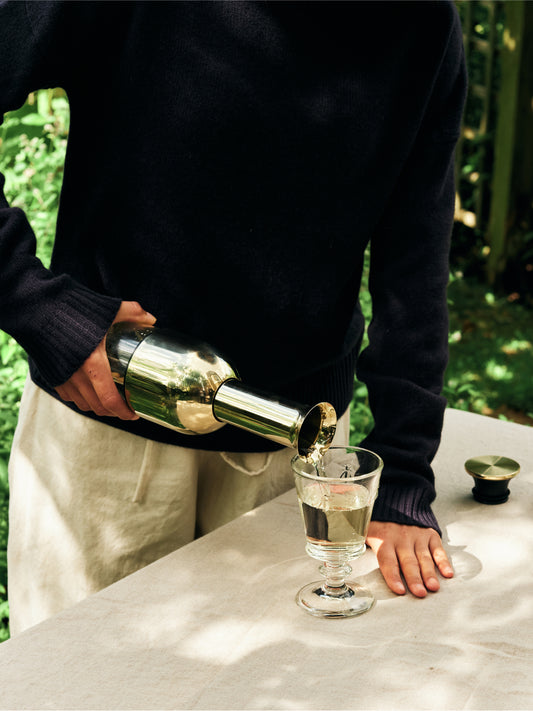
It's also, for what it's worth, a proper decanter in its own right. The long neck opens the wine up the same way any decanter does, and the sharp lip means drip-free pouring. ETO comes in seven finishes, each backed by a lifetime warranty, and every part is designed to come apart for cleaning. Our step-by-step guide to using ETO covers exactly how it works, or you can browse the collection directly.
Yes. This is over decanting, and it's what happens when the fruit flattens, the aromatics fade, and the wine reads as tired rather than open. It happens fastest in wide-bottomed decanters and with mature and delicate bottles. Once a wine has given up its aromatics, no amount of waiting brings them back. That’s exactly why ETO’s long funnel helps ensure moderate aeration as you decant the wine in..
A conventional decanter does the opposite. It's designed to expose wine to as much air as possible, which is the reverse of preservation. The exception is an airtight wine decanter like ETO, which is a different category of object entirely. That's the difference between real wine decanter storage and simple decoration, and it's the specification to check before buying if preservation matters to you.
Yes, if the wine is staying in it, including red. Cold slows every reaction that degrades wine, and you can always let a glass warm in your hand afterwards. The practical obstacle is shape: most decanters are the wrong dimensions for a fridge shelf, but ETO was designed to stand in the fridge door instead.
The nose goes first, turning dull and flat before anything else changes. Then a sharp, vinegary edge appears, and the colour browns at the rim. Oxidised wine is unpleasant rather than unsafe, and the decline is gradual, so trust your nose over the calendar.